Parquet floor repair in Kragujevac
When the floor as a whole is sound and the problem sits in one place, renovating the entire room is an unnecessary expense. A repair addresses exactly what is damaged — individual staves, open gaps, spots that squeak or move.
from 1 stave
When this is needed
- A few staves have cracked, burned or been damaged by water.
- The floor squeaks in a particular spot when walked on.
- Staves have come away from the subfloor and move.
- Gaps have opened after the heating season.
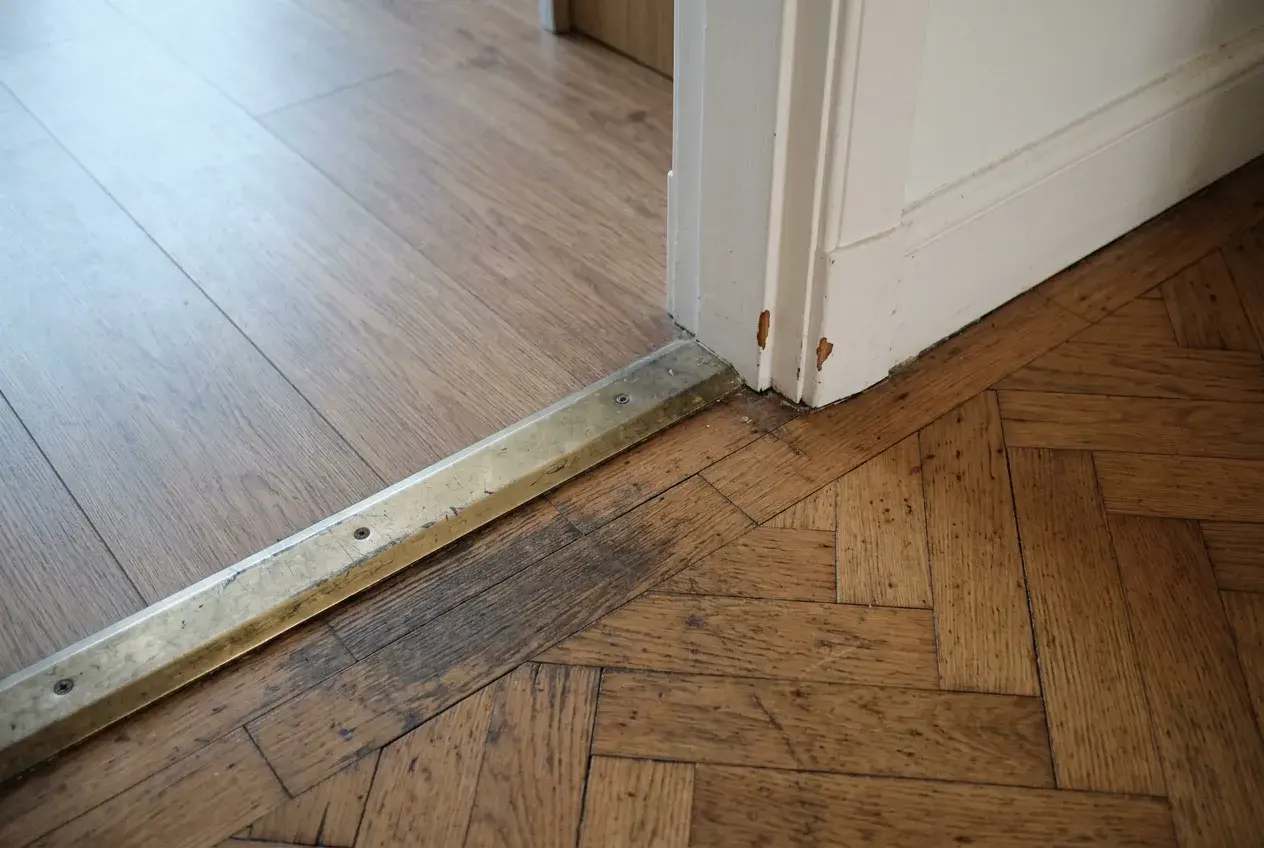
- A mark is left after a partition wall or an old threshold was removed.
- Skirting is missing or was damaged during renovation.
What an estimate requires
- A close-up photo of the damage and a second one from further back, showing its relation to the rest of the floor.
- Roughly how many staves are affected.
- Whether the cause is known — water, impact, a leak, old adhesive failure.
- Whether spare parquet from the same batch exists; if not, the colour of the replacement can be approximated, but an exact match with an old, faded floor is not a realistic expectation.
How the process runs
Establishing the cause
If the cause is moisture or loss of bond, replacing a stave without addressing it means the problem returns.
Removing the damaged pieces
Damaged staves are lifted carefully so the neighbouring ones stay intact, preserving tongue and groove wherever possible.
Fitting the replacement
New staves are selected to match the species and fitted into the existing pattern, then bonded to the prepared subfloor.
Blending the surface
The repaired area is sanded flush with its surroundings and coated. On an older floor the replaced section as a rule remains noticeable until the colours converge over time.
Materials and methods
- A replacement requires the same species and the same stave format; a difference in size cannot be hidden by a finish.
- Small defects and gaps are filled with a paste made from the dust of the same floor.
- Squeaking usually comes from a lost bond with the subfloor and is solved by local refixing, not by coating.
Duration
A repair is as a rule shorter than renovating a whole room, but adhesive curing and finish drying still apply. When a repair is combined with sanding the whole room, the two are merged into one cycle.
What drives the price
- Number of staves being replaced.
- Availability of the matching species and format.
- Whether the underlying cause, such as loss of bond, must be addressed.
- Whether only the repaired area or the whole room is sanded and finished afterwards.
- Complexity of the pattern; herringbone demands more precise fitting.
What this does not solve
- A replaced stave in an old floor rarely looks identical; the colour is approximated, not matched.
- If the damage is spread across the whole surface, a repair makes no sense and renovation or replacement follows.
- A repair does not solve moisture in the subfloor — that is a separate job that must come first.
When another solution is needed
- If more than a few areas are damaged, sanding and finishing the whole room gives a more even result.
- Where the subfloor is permanently damp, no repair lasts until the source of moisture is removed.
Common questions about this service
Can just the damaged section be repaired?
Yes, and it is usually the most sensible solution when the rest of the floor is sound. Expect the replaced area to remain noticeable for some time on an older floor, because the surrounding timber has darkened under light for years.
Why does the floor squeak?
Most often because a stave has lost its bond with the subfloor and shifts under load. It is solved by refixing that spot, not by coating or sanding.
The gaps have opened — is that a fault?
Timber moves with the humidity of the air, so gaps widen during the heating season and partly close in summer. Filling is therefore done together with sanding, when the floor is in its usual state rather than at an extreme.