Parquet floor sanding in Kragujevac
Sanding removes the old finish and a thin layer of wood beneath it. Scratches, dark worn patches and height differences between staves disappear, and the floor becomes a flat, clean base for a new finish. It is the only process that restores an old parquet floor without replacing timber.
P40 → P120
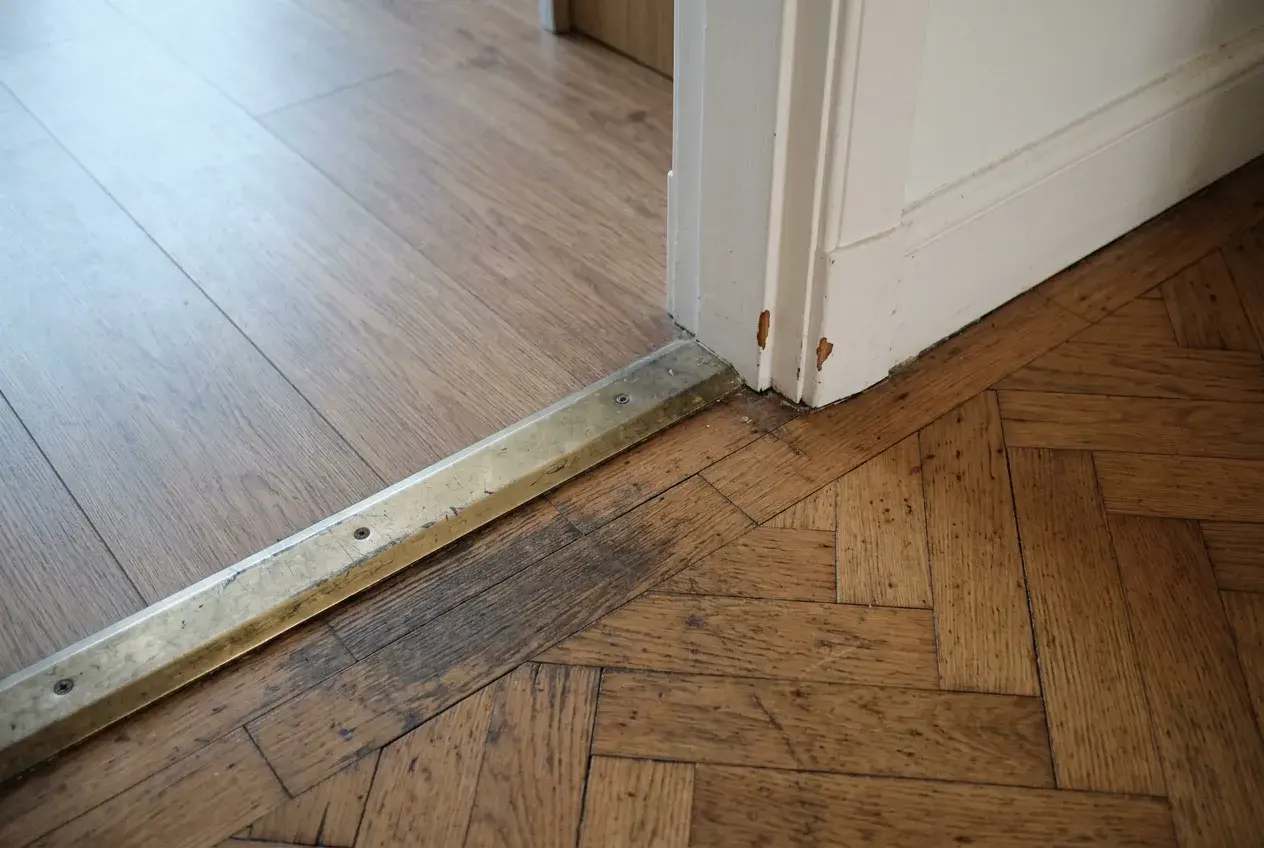
When this is needed
- The finish is thin in places or gone entirely along the walking paths.
- The floor is darker around doorways, under the table and near the window.
- Staves sit at different heights and you can feel it underfoot.
- Gaps have opened up and collect dirt.
- The floor was oiled or waxed and no longer refreshes evenly.
- You have bought a flat with an old parquet floor that has not been touched in years.
What an estimate requires
- A photo of the whole room, ideally in daylight, shows the general condition and where the wear sits.
- A close-up shows whether only the finish is damaged or the wood underneath as well.
- The approximate area determines the scope of work and the drying time involved.
- Whether the floor has been sanded before changes the assessment significantly — every sanding removes part of the wear layer.
- Loose or squeaking spots are dealt with before sanding, never after.
How the process runs
Inspection and room preparation
The room is cleared, skirting is removed where needed, and the floor is checked for protruding nails or screws that would tear the abrasive and damage the machine.
Coarse sanding
The first pass removes the old finish and levels the differences between staves. Grit is chosen according to the floor's condition — the thicker the finish and the more uneven the floor, the coarser the paper.
P40–P60
Filling the gaps
Dust produced by sanding is mixed with a binder into a paste worked into gaps and small defects. The colour then matches the floor itself instead of standing out.
Fine sanding
Successive passes gradually remove the marks left by the previous grit. The final pass determines how smooth the surface is and how it will take the finish.
P80–P120
Vacuuming and inspection
The floor is vacuumed thoroughly, edges and corners included, because every speck of dust stays visible under the first coat. The surface is then checked at a raking angle against the light.
Materials and methods
- Machines with dust extraction into a bag or vacuum greatly reduce airborne dust, but do not eliminate it.
- Edges and corners are worked with a separate machine, as the large one cannot reach the wall.
- Grits are used in sequence; skipping a step leaves marks that only become visible after the finish goes on.
- The filling paste is made from the dust of the same floor, so the gaps match the timber.
Duration
Duration depends on the area, the condition of the floor and the number of rooms. Sanding and finishing are linked jobs — drying time sits between the coats, so the total always includes those pauses. The contractor confirms the specific schedule after inspecting the floor.
What drives the price
- Floor area and the number of separate rooms.
- Thickness and hardness of the old finish — old solvent-based lacquers need more passes.
- Condition of the staves: any loose or damaged ones are repaired before sanding.
- How much gap filling is required.
- Timber species; harder species sand more slowly.
- Whether skirting is removed and refitted or replaced.
- Floor level and access when machines must be carried up without a lift.
What this does not solve
- Sanding does not fix the subfloor beneath the parquet; a problem in the screed or the adhesive stays.
- Deep water or urine stains often run through the whole wear layer and will not sand out.
- Burns, deep cracks and rot require stave replacement, not sanding.
- Parquet cannot be sanded indefinitely — each pass removes part of the layer above the tongue and groove.
When another solution is needed
- If the wear layer is down to the tongue, replacement is the only option.
- When only a few staves are damaged on an otherwise sound floor, repair is cheaper and faster than renovating the whole surface.
- If the floor is loose across a larger area, the bond with the subfloor is addressed first.
Common questions about this service
How many times can parquet be sanded?
It depends entirely on the thickness of the layer above the tongue and groove. Solid parquet has a thicker layer and takes more renovations than engineered parquet, whose wear veneer is thin. The count cannot be derived from age, only from the remaining thickness, so it is assessed on site or from a detailed photo of an edge.
Does sanding create a lot of dust?
Machines with dust extraction capture most of it, but fine dust still settles around the space. Sensitive items should be moved or covered and doors to the rest of the flat kept closed. The room is vacuumed thoroughly before finishing, because even the smallest particles remain visible under the coat.
Does the furniture have to come out?
Yes. The machine has to cover the whole surface, and the finish needs to dry with nothing resting on the floor. Working room by room is possible, moving furniture between them, but it extends the job.
What if a stain appears under the old finish?
That often only shows after the first pass. Water marks and dark patches sometimes run deep into the timber and will not sand out. In that case you agree with the contractor either to replace those staves or to accept that the mark stays visible under the new finish.