Parquet floor installation in Kragujevac
With installation, most of the work happens before the first stave is laid. The flatness and moisture content of the subfloor decide whether the floor will later squeak, move or lift — and those mistakes cannot be corrected without taking the floor up again.
≤ 2% CM moisture
When this is needed
- New construction where the screed has not yet been covered.
- Replacing an old parquet floor that is no longer worth renovating.
- Moving from tiles or carpet to a timber floor.
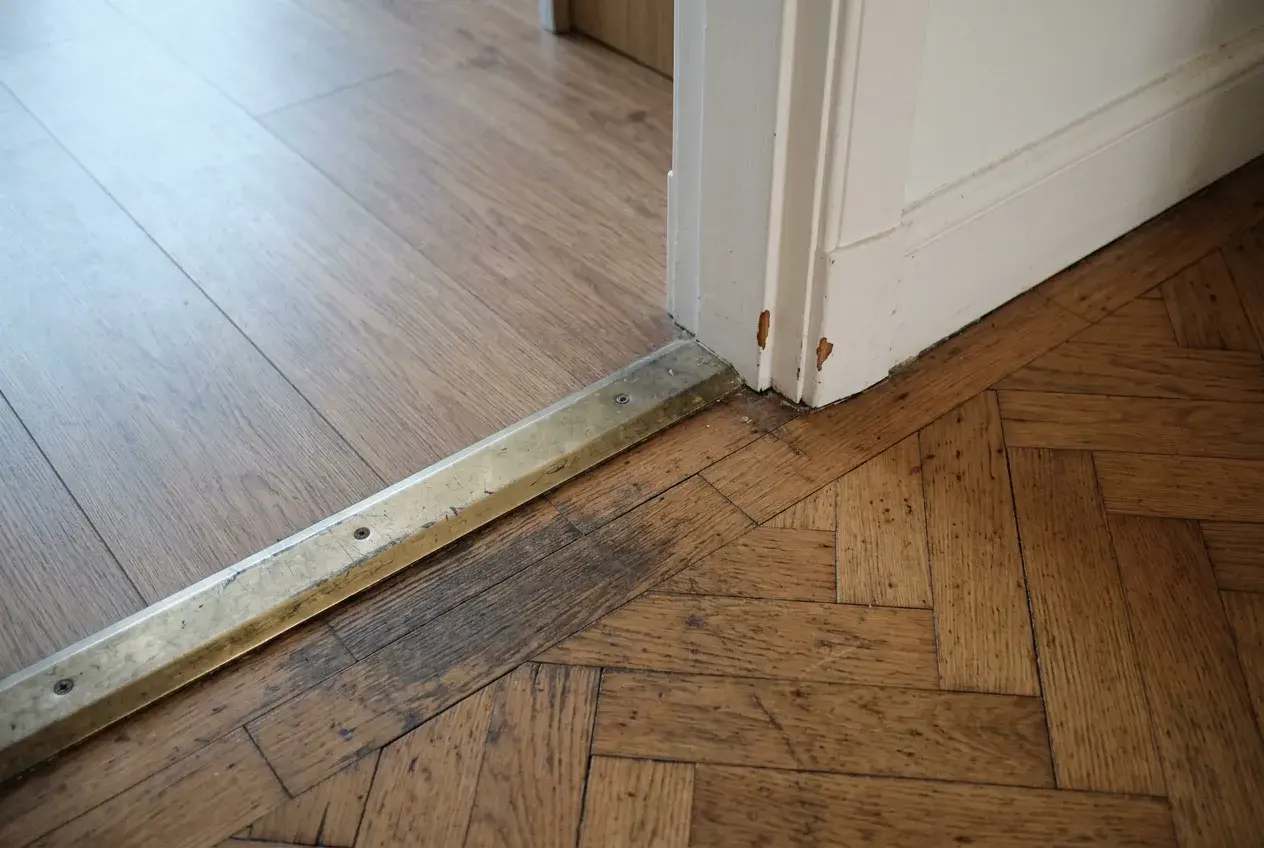
- Continuing an existing floor into an adjoining room.
What an estimate requires
- A photo of the existing subfloor and information about what lies beneath it.
- Approximate area per room, indicating doorways and transitions.
- The age of the screed; fresh screed needs time before it can be covered.
- Underfloor heating changes both material choice and installation method and must be stated up front.
How the process runs
Checking the subfloor
Flatness is measured and moisture content is tested. If the subfloor is outside the limits set by the parquet and adhesive manufacturers, installation is postponed until it is resolved.
≤ 2% CM
Preparation and levelling
Unevenness is corrected with levelling compound. The subfloor must be sound, dry and dust-free for the adhesive to hold.
Acclimatising the material
The parquet rests in the room where it will be installed, in sealed packaging, until it equalises with the temperature and humidity of the space.
Installation
Staves are glued or laid to the chosen pattern — straight, herringbone, plank. An expansion gap is left along the walls, because timber moves as humidity changes.
Sanding and finishing
Solid parquet is sanded and finished after installation. Engineered parquet arrives pre-finished, so only skirting and thresholds follow.
Materials and methods
- Solid parquet allows more future renovations but must be sanded and finished on site.
- Engineered parquet installs faster and is usable immediately, but has a thinner wear layer.
- The installation pattern changes material consumption; herringbone and other complex patterns waste more in cutting.
- The perimeter expansion gap is not a detail of appearance but the condition that keeps the floor from lifting.
Duration
Installation is planned together with subfloor preparation and, for solid parquet, with sanding and finish drying. If the subfloor needs levelling or drying, that time cannot be skipped and is built into the agreement in advance.
What drives the price
- Type of parquet: solid or engineered.
- Installation pattern; complex patterns take more time and material.
- Condition of the subfloor and the extent of levelling.
- Whether sanding and finishing after installation are included.
- Number of transitions, thresholds and skirting runs.
- Presence of underfloor heating.
What this does not solve
- Installation is never carried out over a damp subfloor, whatever the deadline — moisture later destroys both floor and adhesive.
- It is not laid over a subfloor that moves or crumbles.
- Underfloor heating rules out certain parquet types and thicknesses.
- Without a perimeter expansion gap the floor lifts as humidity rises, and that cannot be fixed afterwards.
When another solution is needed
- If the existing parquet is in good condition, renovating it by sanding and finishing costs considerably less than replacement.
- Where the subfloor is problematic or the budget is limited, laminate is the more sensible option.
Common questions about this service
Can parquet go over existing tiles?
In some cases yes, if the tiles are firmly bonded, flat and dry, and if the door height allows the extra build-up. The decision is only made after an on-site check, because misjudging the subfloor means lifting the whole new floor later.
Solid or engineered parquet?
Solid parquet has a thicker wear layer and takes more future renovations, but must be sanded and finished where it is installed. Engineered parquet is usable sooner and cleaner to install in a furnished flat, with a thinner layer that can be renewed fewer times.
Can parquet be laid over underfloor heating?
It can, but only certain types, thicknesses and installation methods, and only with the correct heating protocol before and after laying. Underfloor heating must be declared before the material is chosen.